Grand Ambitions at the Starting Line
In early 2024, Olympic legend Michael Johnson, one of the most decorated sprinters in history, announced a bold plan to revolutionise track and field. He unveiled Grand Slam Track, a new professional league aiming to keep athletics in the spotlight between Olympic Games. The concept was likened to the “UFC and Formula One” of track, with Johnson promising four “slam” meets from April to June each year, featuring nearly 100 of the world’s top athletes competing head to head. The goal was to bring the sport’s “fantasy” matchups to life, pitting Olympic and world champions against each other regularly, instead of once every four years.
The new league arrived with tremendous fanfare. Big names signed on early: Olympic 400m hurdles champion Sydney McLaughlin-Levrone agreed to compete in all four events, joined by stars like 1500m Olympic medalists Josh Kerr, Yared Nuguse, and Cole Hocker, plus sprinting standouts such as Fred Kerley and Kenny Bednarek. Johnson touted a hefty $30 million bankroll raised from investors to fund the venture. Grand Slam Track promised massive prize money to lure athletes, each meet’s winner in each event category would take home $100,000, and even the last-place finishers would earn $10,000. In total, about $12–13 million was earmarked for prizes in the inaugural season. The league also secured broadcast deals to maximise exposure: events would stream live on Peacock and even air on the U.S. network The CW, with NBC hosting highlight specials. Everything seemed set for a game-changing event.
Big Names, Big Money, Bright Start
The inaugural season launched in April 2025 with the first meet, dubbed the Kingston Slam, in Jamaica. The meet showcased Johnson’s vision of head to head showdowns. Uniquely, at each Grand Slam meet athletes had to contest two different events over the weekend, with combined results determining the “slam” champion This format led to thrilling scenarios: for example, in Kingston the Olympic 1500m medalists faced off twice, in both an 800m and a 1500m race, to see who would come out on top overall. For elite athletics junkies, it was a dream come true to see such matchups, for casual viewers, the promise was constant excitement and star power on display.
In the opening meets, the star athletes delivered on the track. World and Olympic champions indeed showed up and produced fast times and compelling duels. There was also Irish interest in the series: a handful of Ireland’s top athletes seized the opportunity to compete against the global elite for serious money. Andrew Coscoran, Ireland’s middle-distance ace, ran brilliantly in the second meet (the Miami Slam) and finished as runner-up in the men’s long-distance category, a result that earned him $50,000 in prize money. He then finished 4th in the 3000m in the third meet in Philadelphia, with $12,500 to be pocketed. Sprinter Sharlene Mawdsley also impressed in Philly, clocking 51.12 seconds in the 400m and ultimately placing sixth overall in the women’s “long sprints” category. That performance was supposed to net Mawdsley a $15,000 prize, what would've been a significant payday for the Newport athlete. By late May 2025, Grand Slam Track had held three of its four scheduled meets (Kingston in April, Miramar/Miami in May, and Philadelphia in early June), and the concept seemed to be catching on. Athletes raved about the competitive buzz, and fans were treated to “fantasy” matchups that previously were rare outside of major championships.
But behind the scenes, the shine was already beginning to fade. Even as sprinters and distance runners battled on the track for unprecedented prize purses, trouble was brewing in the organisation’s finances.
The Cracks Behind the Scenes
Almost from the outset, warning signs emerged that Grand Slam Track’s foundation was shakier than its glossy launch implied. The league’s business model hinged on large investments and sponsorships to bankroll those six-figure prize payouts and some of that money would never fully materialised. Johnson’s primary backer, a sports investment vehicle called Winner’s Alliance, failed to deliver the full $30 million it had promised up front. According to reports, only about $13 million was actually invested, with the rest contingent on the league “proving” itself. This shortfall left Grand Slam Track under capitalised from day one.
The inaugural meet in Kingston, while competitive, underwhelmed potential investors in other ways. Representatives of Eldridge Industries walked away unconvinced, the meet apparently didn’t show enough sizzle or spectator interest to justify pouring in new funds. A tentative funding deal with Eldridge evaporated after Kingston, meaning there was no new money was coming to bolster the league’s accounts.
By the time the circuit moved to its third stop in Philadelphia at the end of May, budget cuts already were evident. Organisers quietly shortened the Philadelphia meet from three days to two and even halved the prize money on offer. Athletes and coaches started whispering that something was amiss. The huge prize checks ceremoniously presented on the track were, in reality, not being paid out promptly.
Grand Slam Track officials initially offered murky explanations. Athletes were told that payment delays were due to routine hurdles like doping control protocols, implying prizes would be released once drug test results were confirmed. But as weeks passed, those excuses wore thin. In June, shortly after the Philadelphia meet, Michael Johnson privately informed athlete agents of a more alarming scenario. The league’s next wave of funding had fallen through. He cited a “shift in the global economic landscape” and even pointed to things like tariff announcements and economic instability for scaring off investors. In other words, the money had run out. This revelation came just as the league made a high-profile decision to cancel the fourth and final meet, the Los Angeles Slam, which had been scheduled for later that month.
A Season Cut Short and Financial Freefall
After the cancellation of the LA slam, Johnson tried to put a positive spin on the situation publicly. He announced that ending the season at three meets was “not taken lightly” but framed it as a prudent choice after a successful “pilot season”. He vaguely blamed the cancellation on broader economic headwinds and even issues with the venue lease in Los Angeles. In truth, Grand Slam Track simply could not afford to stage the final meet, nor pay the appearance fees it had promised athletes for it.
Over the summer the extent of the league’s financial meltdown came fully into view. Reports in July revealed that Grand Slam Track owed roughly $13 million in unpaid appearance fees and prize money to athletes for the Miami and Philadelphia meets. There were even vendors and service providers that weren't paid. For example, the city of Miramar, Florida had yet to receive payment for renting its track stadium for the Miami meet. The league’s grand payout schedule, which had planned for prize money distributions through July and September was effectively paralyzed. Sebastian Coe, president of World Athletics, acknowledged he was monitoring the situation, an unusual step that highlighted how serious the matter was.
In late July, Michael Johnson gave a candid interview admitting the league was in a “difficult financial situation” and had overspent in its first outings.
Facing mounting pressure, Johnson finally went public in August to apologise to athletes. “It is incredibly difficult to live with the reality that you’ve built something bigger than yourself while simultaneously feeling like you’ve let down the very people you set out to help,” the former Olympic champion wrote, acknowledging the “cruellest paradox” that a league founded to ensure athletes got paid quickly was now “struggling with our ability to compensate them.”
He admitted Grand Slam Track had not received funding that was expected and was scrambling to find new investment. Johnson pledged that the 2026 season would not go ahead unless a solution was found to make athletes whole. By that point, the league had already quietly laid off most of its staff to cut costs.
Collapse into Bankruptcy
Despite Johnson’s vows to right the ship, Grand Slam Track’s financial rescue never came. Behind the scenes, the organisation floated a last ditch proposal to avoid outright collapse: in November 2025, Grand Slam Track offered its creditors (including athletes and vendors) a deal to accept just 50% of the money owed to them. The message was blunt, if creditors refused, the league would have no choice but to declare bankruptcy. Unsurprisingly, many athletes and stakeholders, already feeling betrayed, balked at settling for half of what they’d earned. Most rejected the 50% offer. Johnson even contributed some of his own personal money in an attempt to cover debts and show goodwill in October, but it was too little, too late.
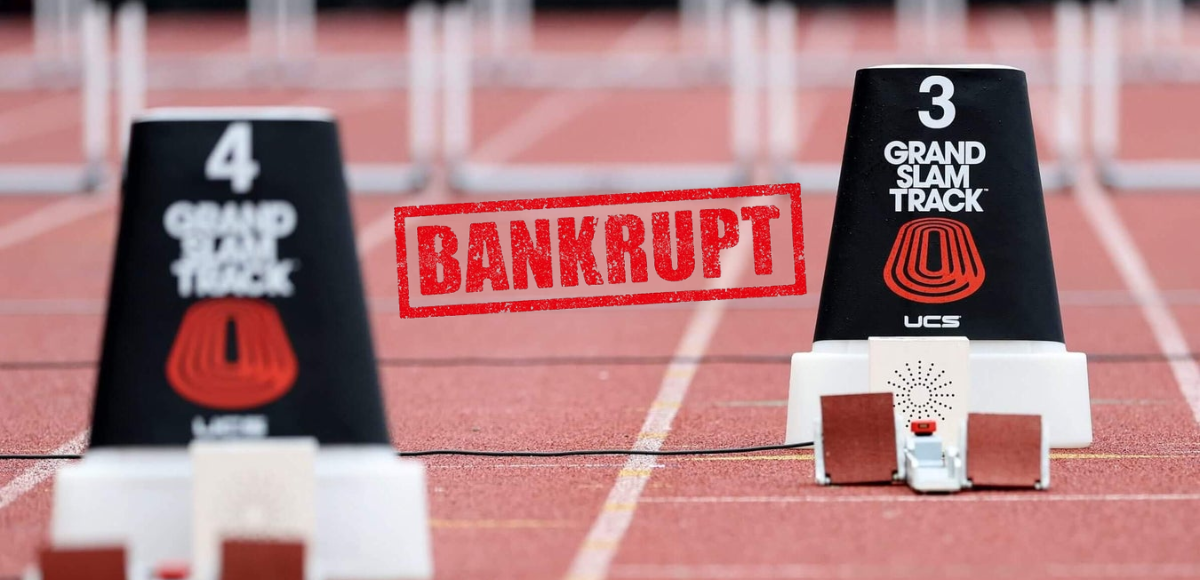
The endgame arrived in early December 2025. Grand Slam Track officially filed for Chapter 11 bankruptcy protection in a Delaware court last week, bringing the dramatic saga to a nadir. Court filings laid bare just how dire the finances were: the league listed less than $50,000 in cash and debts of between $10 million and $50 million, owed to hundreds of creditors. By its own admission, the league that once touted a $30 million war chest was now essentially penniless and drowning in liabilities. In fact, Grand Slam Track reported having 200 to 999 creditors ranging from athletes, coaches and agents to vendors and venues. Among those creditors are many of athletic’s biggest stars, world champions like Sydney McLaughlin-Levrone, Anna Hall, and Melissa Jefferson-Wooden, who signed on with high hopes and are now stuck waiting for compensation. According to an investigation by The Athletic, dozens of top athletes are still owed six-figure sums in appearance fees and prizes.
In announcing the bankruptcy, Michael Johnson struck a defiant tone. “I refuse to give up on the mission of Grand Slam Track and the future we are building together,” he said in a news release. The league’s statement painted the Chapter 11 filing as a “necessary reset” that would allow a reorganisation and hopefully a return in the future. Grand Slam Track claimed it was pursuing new investments and planning a reboot with a different model, perhaps focusing more on mass participation events and media content. However, given the scale of the collapse, few in the track world share Johnson’s optimism at the moment.
Fallout for Global Athletics and Future Prospects
The implosion of Grand Slam Track sent shockwaves through the athletics community. What began as an exciting new chapter for the sport ended in bitter disappointment and for some, financial hardship. Athletes who rearranged their seasons to compete in the Grand Slam series were left unpaid or only partially paid, and many had passed up other earning opportunities (such as Diamond League meets) to support Johnson’s venture. The sense of betrayal is palpable. One agent who represents multiple athletes in the league put it bluntly: Michael Johnson has gone “from the supposed saviour of the sport to being talked about like he’s the worst person”. The backlash has also tarnished Johnson’s once-sterling reputation off the track. In Britain, where Johnson has been a beloved BBC television pundit for decades, he was conspicuously absent from coverage of the 2025 World Athletics Championships in Tokyo in September. After nearly 25 years in that commentary role, Johnson’s future in TV is now uncertain, closely tied to how or if he resolves Grand Slam Track’s woes.
For the athletes and creditors, the road ahead is equally uncertain. The Chapter 11 process will attempt to restructure the organisation’s debts, a process expected to take a few months. Johnson and his remaining team are reportedly seeking new investment to revive the league in some form, and insiders say the sprinter-turned-entrepreneur is “100% committed” to finding a solution. Any comeback, however, is conditional on a major reset: virtually everyone agrees that Grand Slam Track can only resume if all outstanding athlete debts are paid and if future prize funds are secured in advance to restore trust. Those are tall orders for a fledgling league that has burned through goodwill and capital.
In Ireland, the saga has been met with regret and frustration. Athletes like Andrew Coscoran and Sharlene Mawdsley who shone in the Grand Slam’s spotlight now face the prospect that the prize money they “earned” may never fully paid. Coscoran’s $50,000 and payday from Miami and Mawdsley’s $15,000 from Philadelphia, sums that could do a huge amount for their training and careers are stuck in limbo.
Where did it all go wrong? In retrospect, Grand Slam Track’s collapse came from a perfect storm of over ambition and financial mismanagement. The venture spent lavishly to attract talent and attention, which it did, but overestimated the revenues and investments it could reliably secure. It only took a couple of key investors to pull out to make the whole model unravel. Promises were broken, and the trust of the very athletes it aimed to elevate was lost.
As of now, Grand Slam Track’s future is highly doubtful. The league that aimed to reinvent athletics ended up reinforcing an old lesson in sports, grand visions must be matched by sound economics. Michael Johnson insists this isn’t the end of the story, holding out hope that a restructured Grand Slam Track can rise from the ashes. But for the athletes, coaches, and fans, the 2025 season remains a vivid example of how a project that began with golden dreams and global fanfare ultimately crashed and burned in spectacular fashion. The world of track and field is left to pick up the pieces and ensure that the next time someone tries to “save” the sport, they don’t inadvertently set it back.
Sources
This article draws on reporting, interviews, and financial disclosures published by The Guardian, The Telegraph, Defector.com, The Irish Examiner, ESPN, Sports Business Journal, and The42.ie.